Authorization Holds Shape Cash Flow Cycles in Independent Music Venues Using Blended Ticket Renewals
Ines Krause · Jun 12, 2026
Authorization Holds Shape Cash Flow Cycles in Independent Music Venues Using Blended Ticket Renewals
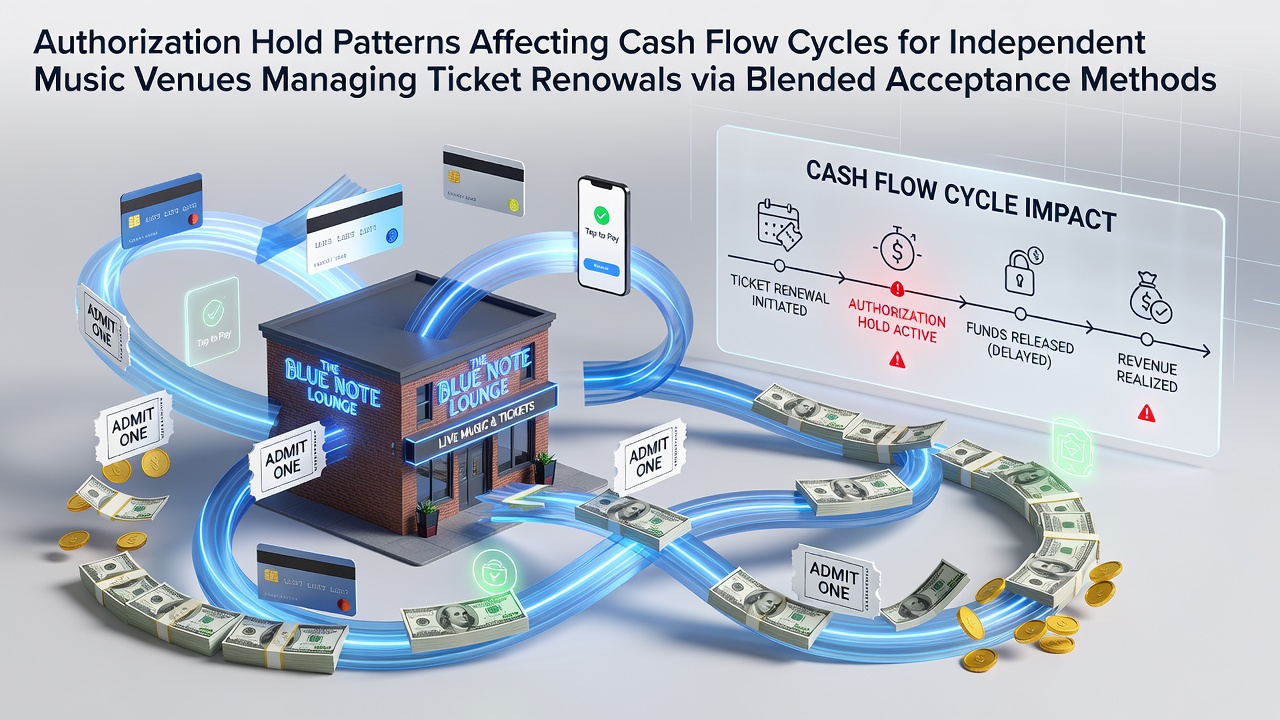
Independent music venues process ticket renewals through a combination of point-of-sale terminals at box offices and online gateways for recurring subscriptions. Authorization holds place temporary reservations on customer card balances until transactions settle, which directly alters the timing of available funds in venue operating accounts. These holds typically last between one and five business days depending on the card network and acquirer policies. Venues that blend acceptance methods encounter different hold durations across channels because terminal-based authorizations often clear faster than those routed through digital recurring billing platforms.Payment Channel Differences in Hold Duration
Terminal transactions at the venue counter generate authorization requests that settle within one to three days in most cases. Online renewal systems, however, route requests through gateway processors that apply additional verification layers, extending holds to three or five days. This staggered timing creates uneven cash inflows throughout each renewal cycle.
Observers note that venues scheduling major subscription drives around peak seasons experience pronounced liquidity gaps when multiple online authorizations remain pending simultaneously. Data from payment processors indicates that blended operations see hold amounts representing 15 to 30 percent of daily ticket revenue during high-volume periods.
Impact on Operating Reserves
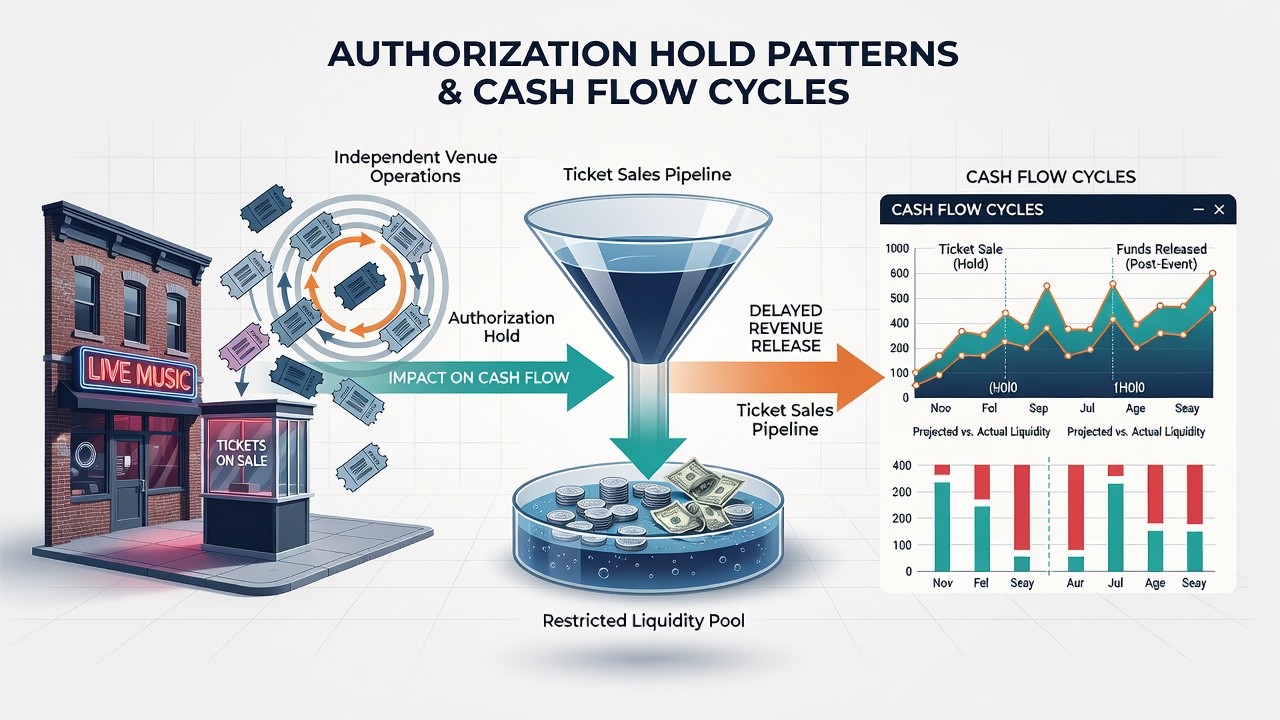
Cash flow cycles for these venues revolve around predictable expenses such as artist guarantees, staff payroll, and facility maintenance. When authorization holds tie up incoming ticket funds, managers must draw from reserves or delay vendor payments until settlements post. One study of small performing arts organizations revealed that venues averaging under 500 seats reported reserve drawdowns increasing by 22 percent during months with concentrated renewal activity.
Seasonal Patterns and June 2026 Projections
Renewal patterns intensify ahead of summer festival seasons and fall programming launches. In June 2026, several regional venue networks plan coordinated subscription campaigns that will route a higher share of renewals through online gateways. Analysts project this shift will lengthen average hold periods by one additional day across blended systems because digital processors apply stricter fraud screening during volume spikes.
Venues that maintain separate settlement accounts for terminal and online streams can offset some timing mismatches. Those accounts allow managers to forecast when funds will become available and adjust short-term borrowing accordingly.
Blended Method Strategies Observed in Practice
Many independent venues route high-value renewals through terminals whenever customers visit in person, shortening the hold window. Recurring digital payments continue for remote subscribers, yet operators monitor gateway reports daily to anticipate when released funds will appear in operating accounts. This approach reduces the overall hold burden compared with routing every renewal through a single channel.
According to figures from the Federal Reserve, authorization hold volumes in the entertainment sector grew 18 percent between 2023 and 2025 as more venues adopted hybrid acceptance. The same report notes that smaller merchants experience proportionally larger cash flow effects because their transaction counts remain modest relative to larger chains.
Regulatory Context Across Regions
Payment timing rules differ by jurisdiction. In Canada, Payments Canada guidelines require acquirers to release settled funds within two business days for most card transactions, which compresses hold impacts for venues operating north of the border. European venues follow European Central Bank settlement standards that emphasize same-day posting once authorization clears, further reducing timing friction in blended environments.
Venues that track hold patterns across both channels gain clearer visibility into weekly cash positions. They adjust renewal email schedules and box-office promotions to balance incoming authorizations and prevent clustered settlement delays.
Conclusion
Authorization hold patterns continue to influence cash availability for independent music venues that rely on blended acceptance for ticket renewals. Terminal and online channels produce distinct hold timelines that intersect with seasonal demand peaks, requiring deliberate reconciliation of settlement schedules. Venues that monitor these variables maintain tighter control over operating reserves and reduce the frequency of short-term financing needs. As renewal campaigns expand in 2026, the interaction between hold durations and cash flow cycles will remain a central operational consideration for these organizations.