Balancing Authorization Windows and Transfer Options in Niche Subscription Delivery Networks
Ines Krause · Jun 19, 2026
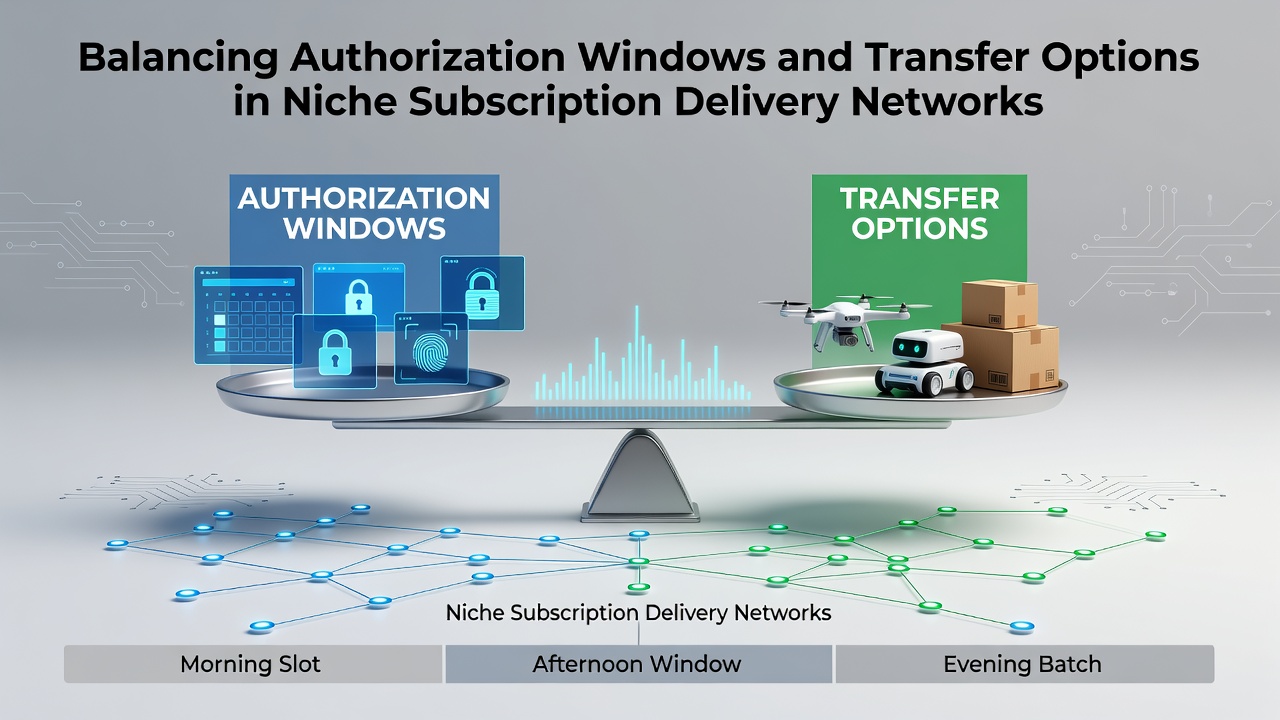
Balancing Authorization Windows and Transfer Options in Niche Subscription Delivery Networks
Operators in niche subscription delivery networks manage recurring shipments of specialized goods such as artisanal foods, craft beverages, and hobby supplies, and they coordinate authorization windows with various transfer mechanisms to maintain steady operations. Authorization windows represent the period during which a payment processor reserves funds on a customer's account before settlement occurs, and these intervals directly influence inventory planning along with delivery scheduling in networks that serve limited customer segments. Data from payment system analyses indicate that shorter windows reduce hold times on customer funds while longer ones provide buffers against failed transactions in recurring billing cycles. Niche networks often integrate multiple transfer options including automated clearing house transfers, card-based settlements, and emerging digital methods to accommodate different customer preferences across regions. Researchers tracking subscription models have observed that combining these options allows operators to align fund releases with specific delivery milestones, such as warehouse dispatch dates or last-mile carrier handoffs. In practice, a network handling monthly specialty coffee deliveries might authorize payments five days before shipment while routing settled amounts through bank transfers to cover supplier invoices on the same timeline.Authorization Window Mechanics in Delivery Contexts
Authorization windows function as time-bound reservations that processors place on customer accounts, and they typically span from a few hours to several days depending on the payment rail selected. In subscription delivery setups, these windows extend through the interval between order confirmation and physical handover to carriers, which creates dependencies on accurate timing data from logistics partners. Figures from industry monitoring services reveal that mismatches between authorization durations and delivery lead times contribute to higher reversal rates when customers dispute charges after packages leave fulfillment centers.
Operators adjust these windows based on product categories because perishable items demand tighter coordination than durable hobby kits. One study of recurring service platforms documented cases where extending windows by 48 hours improved authorization success rates for international shipments subject to customs delays. Yet networks must weigh this against customer experience factors since prolonged holds can trigger account alerts or declined subsequent transactions in automated renewal sequences.Transfer Option Integration Patterns
Transfer options encompass the pathways that move authorized funds from customer accounts to merchant settlement accounts, and networks select among them according to cost structures, speed requirements, and geographic coverage. Automated clearing house systems provide batch processing suited to predictable subscription volumes, whereas card networks offer near-real-time confirmations that support just-in-time inventory releases. Observers note that hybrid approaches emerge when networks route domestic customers through bank transfers while directing cross-border subscriptions via card rails to bypass varying regulatory hold periods.
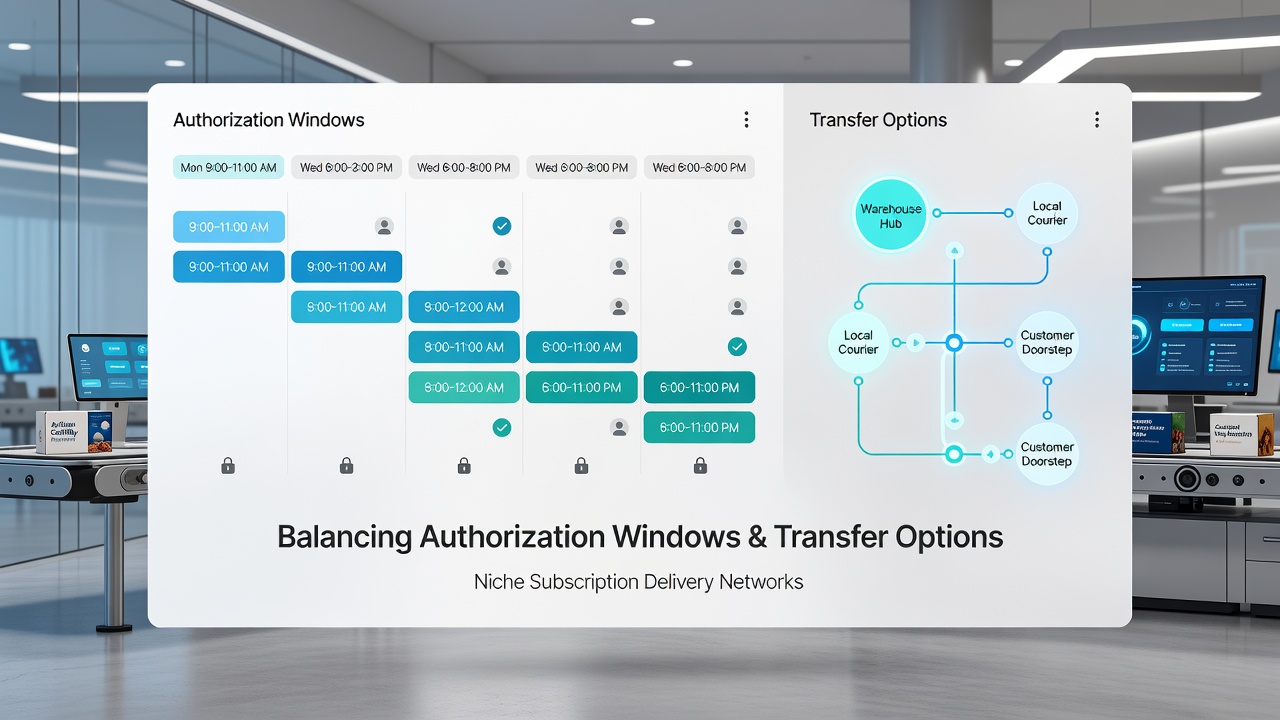 As of June 2026, several payment frameworks updated their settlement protocols, prompting networks to recalibrate authorization and transfer pairings for compliance with revised timing standards. Those updates affected how operators sequence fund movements relative to delivery confirmations, particularly in networks serving regional agricultural producers who rely on timed transfers to pay seasonal harvesters. Evidence from transaction logs shows increased adoption of tokenized card options alongside traditional bank transfers to maintain authorization continuity during these protocol shifts.
Operational Coordination Strategies
Coordinating authorization windows with transfer selections requires mapping each subscription cycle against carrier schedules and supplier payment terms. Networks employ software that monitors real-time status from both payment processors and logistics providers, which enables dynamic adjustments when a delivery experiences weather-related postponements. According to reports compiled by the Bank of Canada on retail payment flows, synchronized systems reduce instances where funds remain authorized beyond necessary periods, thereby freeing customer credit lines for additional purchases within the same network.
Take one operator managing a subscription service for rare plant specimens, who aligned two-day authorization windows with direct bank transfers initiated upon carrier pickup confirmation. This setup minimized exposure to chargeback risks during transit while ensuring suppliers received payments within standard net-30 terms. Data indicates similar patterns appear across other specialized categories where delivery variability exceeds standard retail benchmarks.Regional Variations and Data Trends
Payment behaviors differ across jurisdictions because regulatory environments shape both authorization durations and acceptable transfer types. European networks frequently incorporate instant payment schemes alongside established card processes to accommodate cross-border subscriptions, while North American counterparts emphasize automated clearing mechanisms for domestic routes. Research published through academic channels on recurring revenue platforms highlights that networks operating in multiple regions maintain separate authorization profiles per jurisdiction to comply with local settlement rules.
Transaction volume statistics from 2025 through mid-2026 demonstrate steady growth in blended transfer usage within niche segments, driven by customer demand for flexible renewal options. Those figures reveal correlations between shorter authorization windows and higher retention rates when paired with reliable transfer confirmations that update customers at each stage.
Conclusion
Balancing authorization windows against available transfer options remains central to sustaining niche subscription delivery networks amid evolving payment infrastructures. Networks that map these elements against delivery timelines achieve more predictable cash flows and reduced transaction friction. Continued monitoring of regulatory updates and transaction patterns supports ongoing refinements in how operators sequence these components across diverse product categories and customer bases.