Category Code Adjustments and Their Effect on Billing Cycles for Animal Care Providers Employing Both Hardware Terminals and Electronic Invoicing Options
Gisela Lehmann · Aug 21, 2026
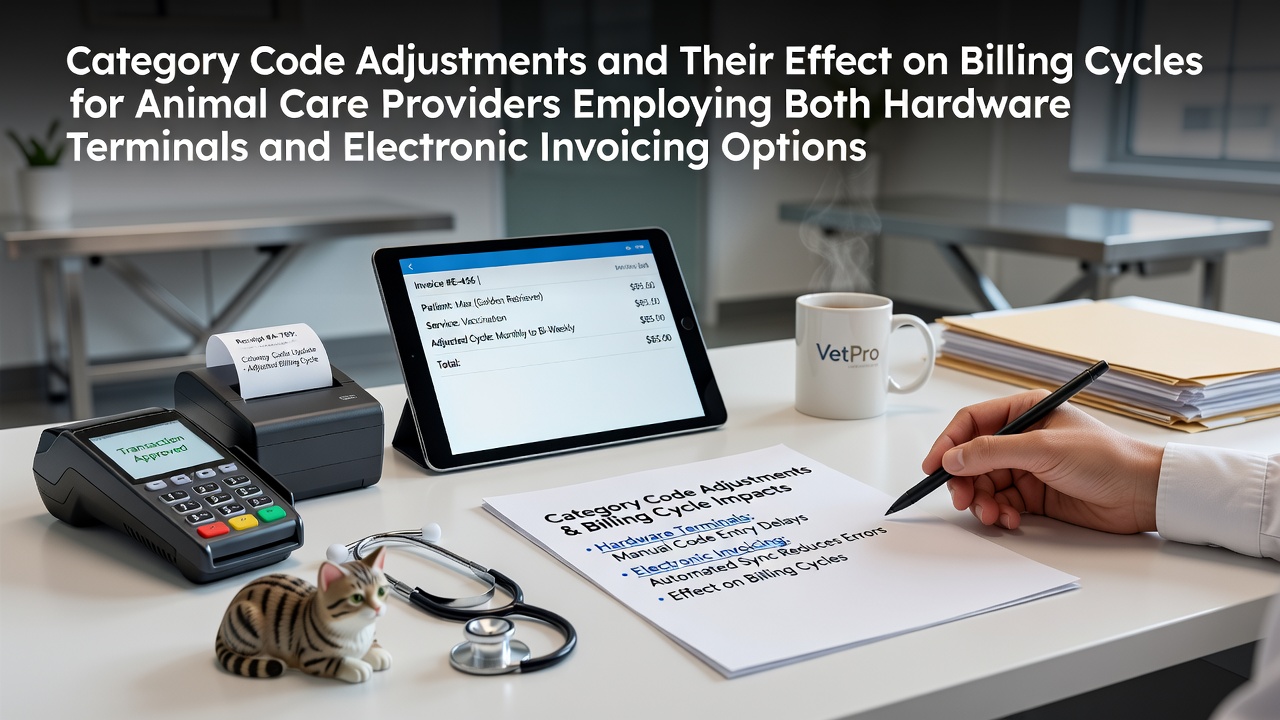
Category Code Adjustments and Their Effect on Billing Cycles for Animal Care Providers Employing Both Hardware Terminals and Electronic Invoicing Options
Animal care providers operate in a payment environment where merchant category codes determine processing rates and settlement patterns, and recent adjustments to these codes have introduced new variables into billing cycles for practices that combine hardware terminals with electronic invoicing platforms. These codes classify businesses for interchange fee calculations, and shifts in classification can alter how quickly funds reach provider accounts while also influencing the frequency of client invoicing.
How Category Codes Apply to Veterinary and Animal Services
Animal care businesses typically fall under merchant category code 0742 for veterinary services, yet some providers receive reclassifications when they expand into retail products or grooming services that carry different codes. Data from the Federal Reserve indicates that code reassignments occur when transaction patterns show significant non-service revenue, and such changes directly affect the cost structure of both card-present terminal transactions and card-not-present electronic invoices.
Providers who accept payments through countertop terminals for in-clinic visits often see one set of authorization and settlement timelines, whereas electronic invoices sent for follow-up care or recurring wellness plans follow separate processing rules tied to the same underlying category code. When adjustments occur, the blended cost profile changes, prompting many practices to review how they space out billing cycles to maintain steady cash flow.
Settlement Timelines in Mixed Terminal and Invoice Environments
Hardware terminals generally settle funds within one to two business days once authorization clears, but electronic invoicing systems can extend that window when higher-risk category codes trigger additional review layers. Observers note that reclassification to a code with elevated interchange rates often coincides with longer holds on invoice payments, particularly when the platform routes transactions through gateways that apply stricter fraud filters.
In August 2026, several payment networks implemented updated validation protocols for category code 0742 transactions that included product sales components, and these updates lengthened average settlement periods by up to 24 hours for invoice-based payments while leaving terminal settlements largely unchanged. Providers who rely on both methods therefore face staggered cash inflows that complicate monthly reconciliation and renewal scheduling.
Effects on Recurring Billing and Client Payment Patterns
Many animal care practices structure wellness plans and medication refills as recurring electronic invoices, yet category code adjustments can raise per-transaction costs enough to encourage longer intervals between billings. Research from Payments Canada shows that merchants facing increased fees often consolidate invoices into quarterly or semi-annual cycles rather than monthly ones, and this pattern appears in veterinary practices that blend terminal payments for acute visits with invoiced recurring services.
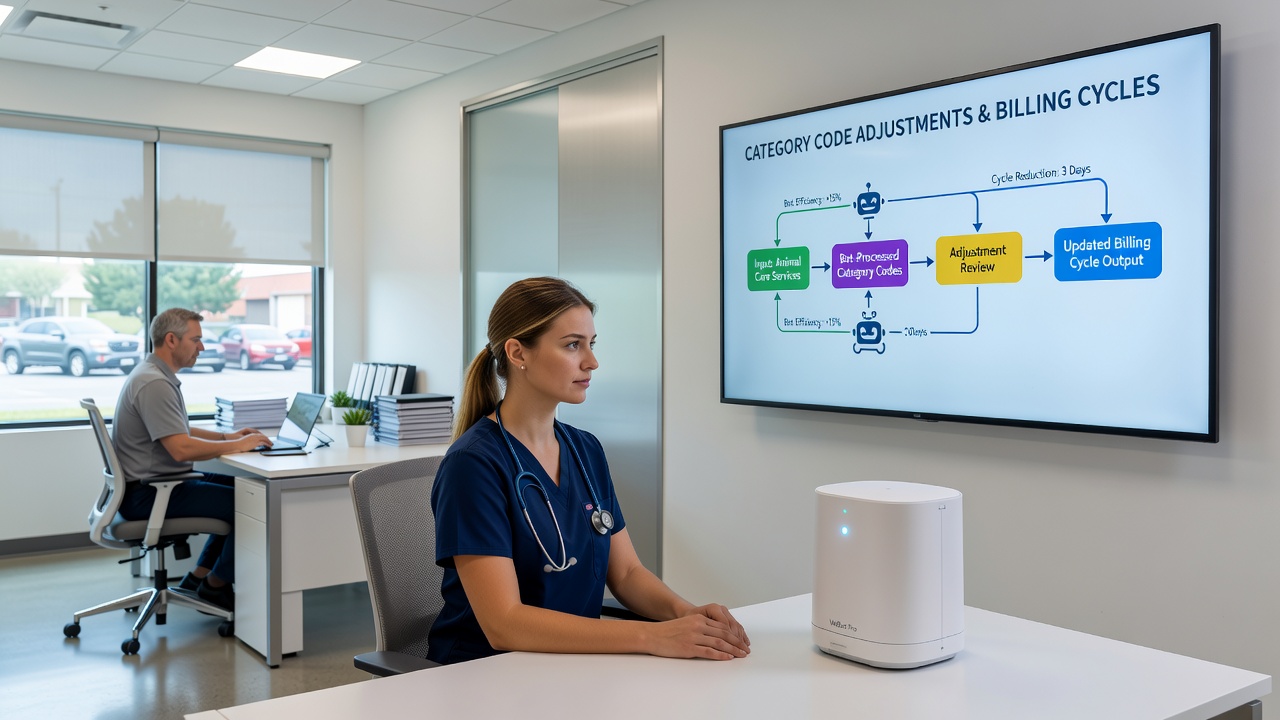
Take one multi-location clinic network that shifted several locations to a revised category code in early 2026; the practice responded by extending electronic invoice intervals from 30 to 45 days while maintaining weekly terminal collections for walk-in clients. The result was a measurable change in average days sales outstanding, according to internal reports shared with industry analysts.
Cost Layering Across Payment Channels
Interchange fees represent only one layer; acquirer markups and gateway charges add further variables that differ between terminal batches and invoice submissions. When a category code adjustment raises the base interchange rate, the combined expense for an invoice transaction can exceed the cost of the same amount processed through a hardware terminal by several percentage points, prompting providers to route more volume through terminals whenever possible.
Those who have studied blended payment environments note that the decision to favor one channel over another often depends on the specific code in use and the settlement speed attached to it. In regions outside North America, similar dynamics appear; the European Central Bank has documented how category code shifts affect cross-border veterinary service providers who accept both in-person and remote payments.
Operational Adjustments Providers Are Making
Animal care practices respond to code adjustments through several operational changes, including updated point-of-sale configurations that flag certain product sales separately and revised client communication schedules that align invoice due dates with expected settlement dates. Some groups now batch terminal transactions more frequently during high-volume periods to offset slower invoice settlements, while others negotiate revised pricing with their processors when category code changes are confirmed.
These adaptations illustrate how a single classification update can ripple through both hardware and electronic channels, affecting everything from staff scheduling for end-of-day reconciliations to the timing of supply orders funded by incoming payments.
Conclusion
Category code adjustments continue to influence billing cycles for animal care providers who use both hardware terminals and electronic invoicing, as reclassifications alter interchange costs and settlement timelines across channels. Practices that monitor these changes and adjust their invoicing intervals accordingly maintain more predictable cash flow despite evolving payment network rules. The interplay between classification, processing method, and billing frequency remains a central factor in how these providers manage revenue streams in mixed payment environments.