Category-Specific Dynamics in Payment Acceptance Workflows for Farmers Market Vendors Managing Online Pre-Orders
Sam Friedrich · Jun 8, 2026
Category-Specific Dynamics in Payment Acceptance Workflows for Farmers Market Vendors Managing Online Pre-Orders
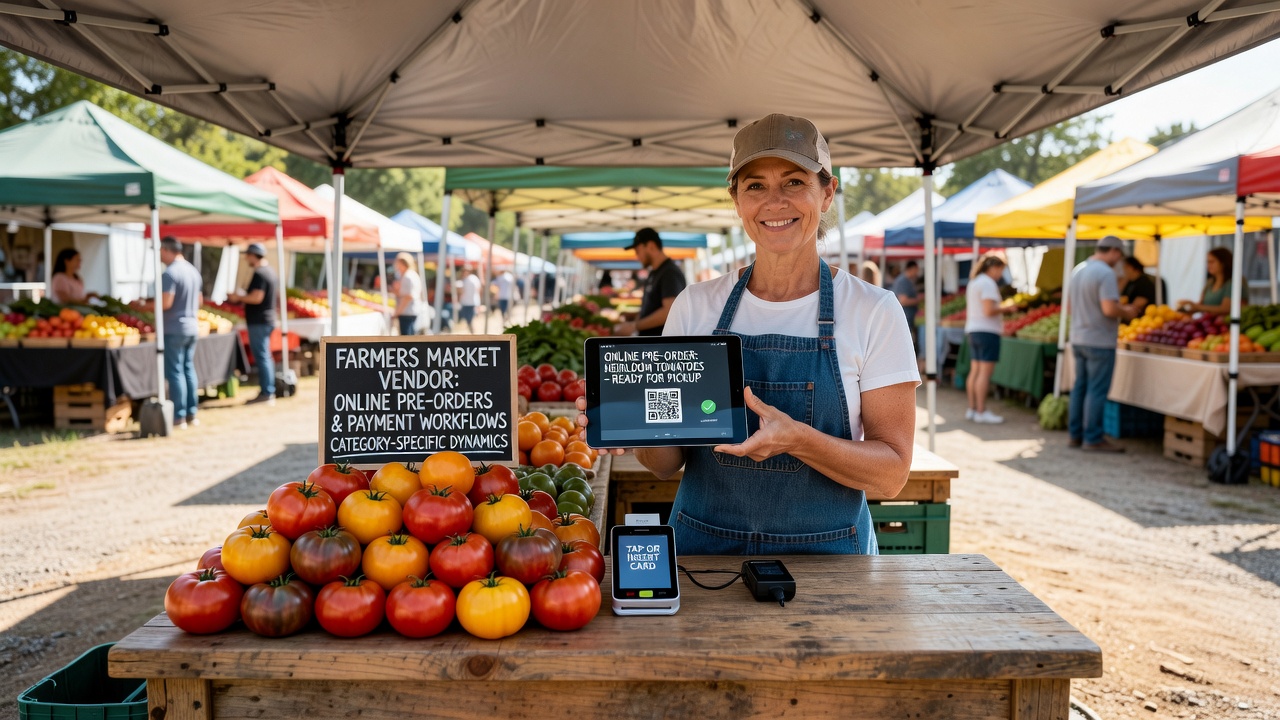
Farmers market vendors who manage online pre-orders encounter distinct payment acceptance patterns shaped by the perishable nature of their goods and the seasonal rhythm of their operations, and these patterns differ markedly from those seen in other retail categories such as durable goods or subscription services. Pre-order systems allow customers to reserve items like berries, leafy greens, or baked goods ahead of market days, which in turn requires vendors to align payment collection with harvest schedules and delivery logistics that change weekly. Data from agricultural extension programs show that by June 2026 many markets across North America and Europe had expanded digital pre-order platforms to reduce on-site crowds and food waste, yet the underlying payment flows still hinge on the short shelf life of the products involved.
Pre-Order Timing and Payment Capture Windows
Vendors typically open pre-order windows three to five days before each market date, and payment authorization must occur early enough to confirm inventory while remaining reversible if weather or supply issues arise. Credit and debit card processors handle these authorizations through temporary holds that release automatically if the order is canceled, whereas ACH transfers move more slowly and often require vendors to set stricter cutoff times. Observers note that produce sellers adjust these windows according to item category, with delicate berries demanding faster confirmation than root vegetables that store longer, and this category-driven flexibility appears consistently in workflow documentation from regional farm bureaus.
Integration of Online Platforms with Physical Market Operations
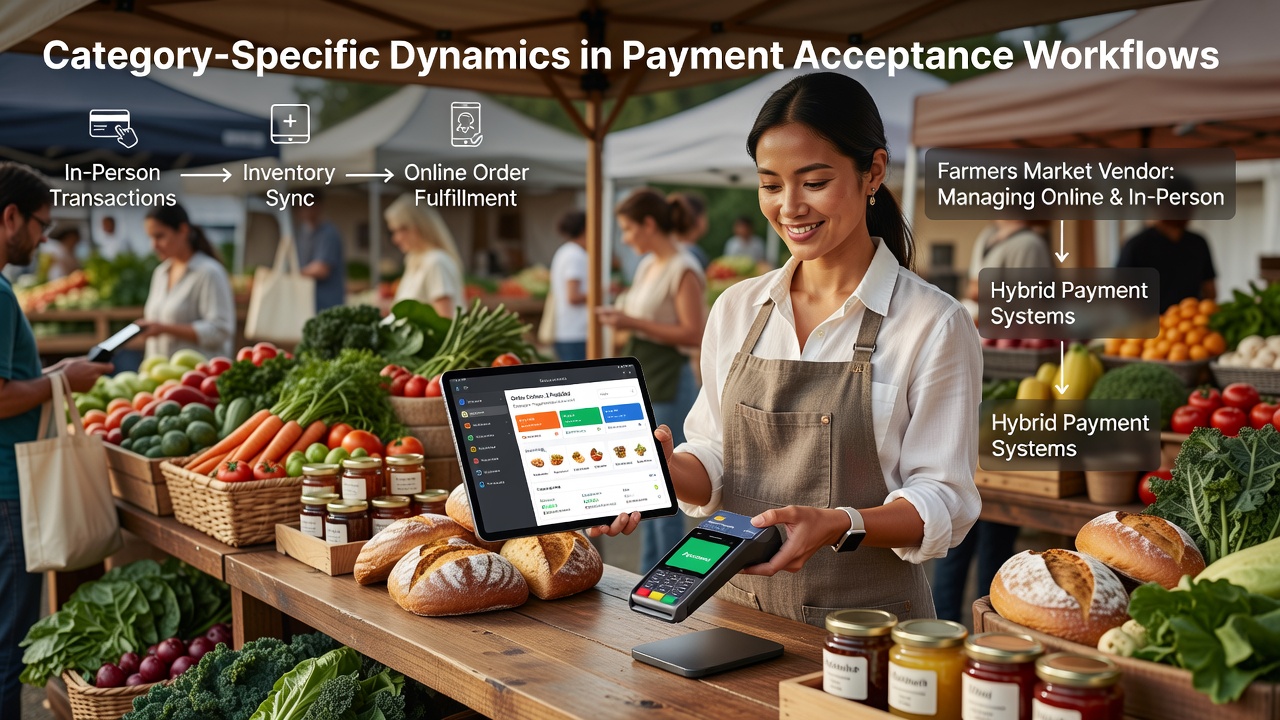
Many vendors rely on the same point-of-sale hardware at the market stall that also processes online pre-order payments, creating a blended workflow where a single terminal or mobile reader manages both channels. Customers who pre-order often receive a QR code or order number that the vendor scans on-site to complete any remaining balance or to record pickup, and this step reduces duplicate entries while maintaining an auditable trail. Studies conducted by university agricultural economics departments indicate that such integrated systems cut reconciliation time by roughly thirty percent compared with separate online and in-person ledgers, particularly when vendors sell a mix of fresh and value-added items like jams or cheeses that carry different tax treatments.
Category-Driven Variations in Acceptable Payment Methods
Payment preferences shift according to product category because customers treat fresh produce differently from packaged goods or prepared foods. Surveys compiled by the Canadian Federation of Agriculture reveal that buyers of organic greens and fruits frequently choose digital wallets for pre-orders to secure limited quantities, while purchasers of meat or eggs more often select bank transfers that allow larger order values without immediate card limits. Vendors therefore configure their online storefronts to display method options that match the item type, and this dynamic appears in checkout analytics from platforms used by thousands of small-scale producers. Those who sell both perishable and shelf-stable categories within the same pre-order cycle commonly maintain separate merchant accounts or sub-accounts to isolate settlement timelines and reduce risk exposure on items that cannot be resold after a missed pickup.
Regulatory and Compliance Factors Specific to Food Vendors
Local health department rules and federal food safety guidelines influence how vendors structure payment acceptance, especially when pre-orders involve temperature-sensitive products that require documented chain-of-custody records. According to guidance issued by the European Food Safety Authority, payment confirmation timestamps must align with packing and transport logs to demonstrate compliance during inspections, which adds an administrative layer not present in non-food retail. Vendors in Australia have adopted similar practices following updates from the Department of Agriculture, Fisheries and Forestry, where digital pre-order systems now include mandatory fields for pickup time windows that help enforce cold-chain standards. These requirements lead many operators to choose processors that export detailed transaction reports rather than basic receipts, ensuring the data can be cross-referenced with harvest and delivery documentation.
Handling Cancellations and Refunds in Perishable Supply Chains
Because growing conditions can change rapidly, vendors build cancellation policies directly into the pre-order workflow, and these policies dictate whether funds are released back through the original payment rail or converted to market credit. Credit card refunds typically settle within two to five business days, while ACH returns may take longer and incur fees that vendors sometimes absorb for customer retention. Research from land-grant universities in the United States shows that markets with high pre-order volumes experience cancellation rates between eight and twelve percent during peak summer months, prompting vendors to set aside reserve inventory or offer substitution options that still require payment adjustments at the point of pickup. This category-specific refund loop differs from durable goods sellers who can restock returned items without time pressure.
Conclusion
Payment acceptance workflows for farmers market vendors who manage online pre-orders remain tightly coupled to the biological and seasonal constraints of their product categories, and the resulting operational patterns continue to evolve as markets adopt digital tools. By June 2026 the combination of integrated terminals, category-specific method options, and compliance-linked reporting had become standard practice among vendors balancing fresh produce sales with online convenience, while still preserving the flexibility needed for weather-driven supply changes. These dynamics underscore how payment systems in this sector prioritize timing accuracy and traceability over the volume-based models common in other industries.