Fee Calculators as Tools for Optimizing Transaction Rates Across Payment Gateways in Online Billing Systems
Gisela Lehmann · Aug 24, 2026
Fee Calculators as Tools for Optimizing Transaction Rates Across Payment Gateways in Online Billing Systems
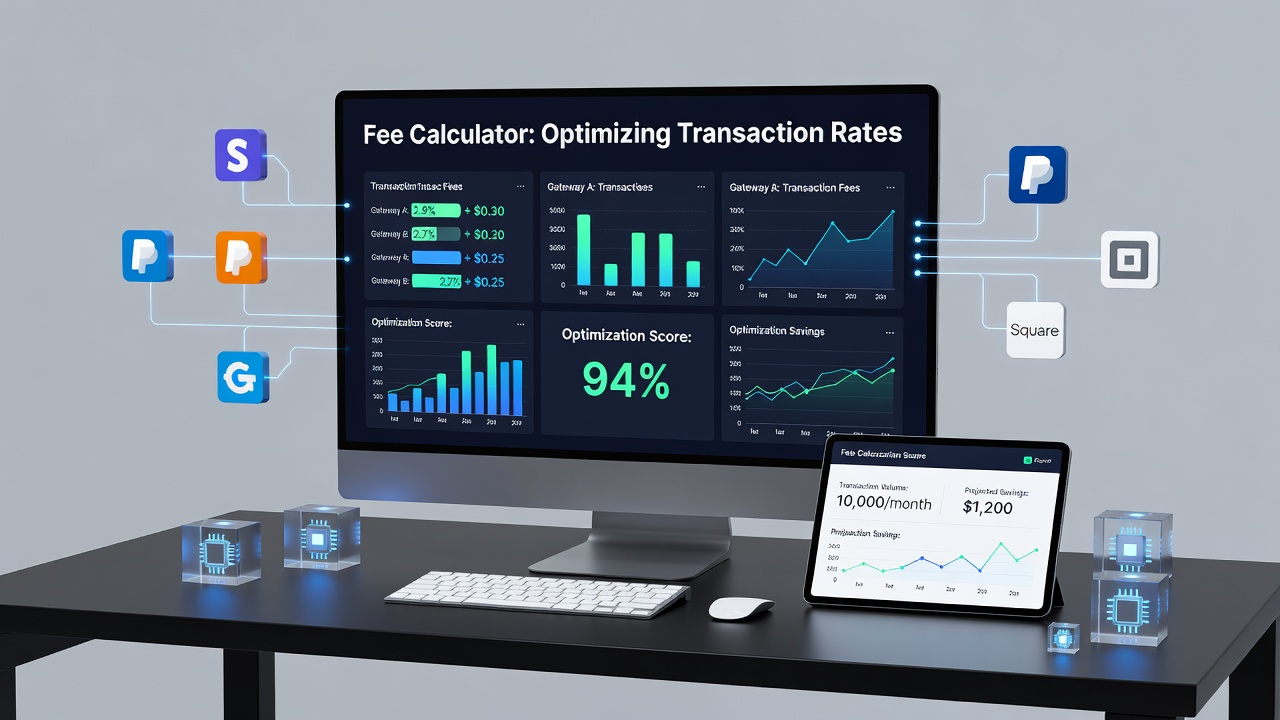
Fee calculators function as analytical instruments that process variable cost inputs from payment gateways and generate comparative outputs for merchants managing online billing systems. These tools aggregate data on interchange fees, processor markups, and fixed charges while accounting for transaction volume thresholds that often trigger tiered pricing adjustments. Observers note that integration with billing platforms allows real-time simulation of cost scenarios across providers such as Stripe, Authorize.net, and Braintree.
Core Components of Transaction Rate Structures
Payment gateways apply layered fees that include interchange rates set by card networks, acquirer margins, and gateway-specific assessments. Research from the Federal Reserve Bank of San Francisco indicates that average interchange fees for credit card transactions hovered around 1.8 to 2.2 percent in 2025, with additional per-transaction costs ranging from 10 to 30 cents depending on card type and processing method. Fee calculators incorporate these variables along with regional surcharges and cross-border premiums, then output projected monthly or annual expenses based on historical transaction patterns.
Merchants in subscription-based models benefit when calculators factor in recurring billing frequencies, because monthly volume commitments frequently unlock discounted rates. Data from industry reports show that automated renewal systems generate higher predictability in fee modeling compared to one-off purchases, allowing precise forecasting of total processing expenditures.
Comparative Analysis Across Gateway Options
Users input parameters such as average transaction size, monthly volume, and payment method mix into fee calculators, which then rank gateways according to net cost efficiency. This process accounts for blended rates that combine credit card, ACH, and digital wallet transactions. A study conducted by the European Central Bank in 2025 highlighted that ACH transfers typically incur fees between 0.5 and 1.0 percent, significantly lower than standard card rates, yet settlement timing differences can affect overall cash flow calculations.

Calculators also evaluate authorization hold periods and settlement cycles that influence liquidity. As of August 2026, several gateways introduced dynamic pricing modules tied to real-time risk scoring, and fee calculators have adapted by pulling updated API feeds to reflect these shifts. Those who manage high-volume online billing platforms often discover that switching gateways after running multiple scenarios yields measurable savings when volume exceeds 10,000 transactions per month.
Implementation in Recurring Billing Workflows
Online billing systems integrate fee calculators through APIs that pull live transaction data and simulate cost outcomes under different gateway configurations. This setup supports scenario planning for seasonal volume spikes or promotional campaigns. Researchers at the University of Melbourne documented in a 2024 paper that merchants using calculator-driven gateway selection reduced overall processing costs by an average of 12 to 18 percent when they adjusted for card-present versus card-not-present distinctions in hybrid environments.
Additional variables include chargeback ratios, refund processing fees, and currency conversion margins. Calculators flag these elements when merchants operate across multiple jurisdictions, where regulatory caps on interchange fees differ between North American and European markets. The tool outputs help identify whether a single gateway or a multi-processor routing strategy delivers lower aggregate expenses.
Limitations and Data Accuracy Considerations
Fee calculators rely on accurate input data and current rate schedules, yet pricing changes announced by networks or processors can lag in some tools. Observers note that manual verification against official gateway documentation remains necessary, especially when new card types or regulatory adjustments occur. In August 2026, updates to interchange rules in select regions prompted several calculator providers to release versioned updates that incorporated revised fee tables.
Accuracy also depends on transaction categorization, because misclassifying a digital wallet payment as a standard card transaction alters projected costs. Advanced calculators now include validation checks that flag inconsistent inputs and suggest corrections based on common billing patterns.
Conclusion
Fee calculators provide structured methods for evaluating and minimizing transaction expenses across payment gateways in online billing systems. They process complex fee variables into comparable outputs that support informed gateway selection and routing decisions. Continued refinement of these tools through API integrations and updated regulatory data maintains their relevance for merchants navigating evolving payment landscapes.