How Boutique Wineries Sync Terminal Swipes with Recurring Club Shipments to Trim Gateway Layers
Sam Friedrich · Aug 21, 2026
How Boutique Wineries Sync Terminal Swipes with Recurring Club Shipments to Trim Gateway Layers
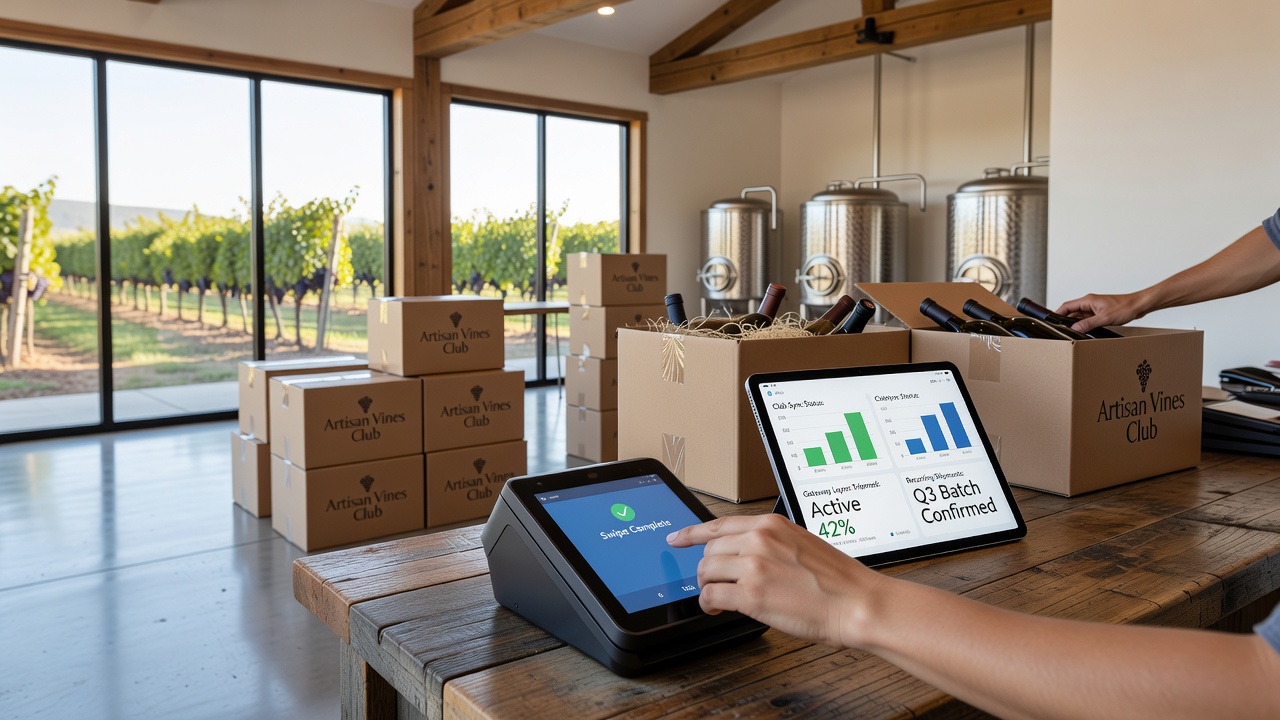
Many boutique wineries operate tasting rooms where customers swipe cards at terminals while also running wine club programs that ship bottles on fixed schedules, and operators have started aligning these two payment streams to reduce the number of payment gateways in use. Research from payment processing analysts indicates that separate systems for in-person terminal transactions and recurring digital billing often create duplicate authorization paths, each carrying its own per-transaction fees and settlement delays. When wineries connect terminal hardware directly to club management platforms, transaction data flows through a single gateway instance for both channels, which trims the intermediate processors that would otherwise handle each type of payment independently.
Payment Flow Alignment in Tasting Rooms and Club Programs
Terminal swipes at winery counters capture card details at the point of sale, yet club shipments require stored credentials for automated billing every month or quarter, and synchronization begins when software links the initial swipe record to the member's recurring profile. Observers note that this connection lets the same gateway handle both the one-time authorization and the subsequent recurring charges without routing the later transactions through an additional service provider. Data from industry reports shows that wineries using unified platforms report fewer failed authorizations because the initial swipe verifies the card in real time, and that verified token carries forward to future club shipments.
Studies conducted by regional payment associations reveal that separate gateways for terminals and online recurring tools can add 0.5 to 1.5 percent in blended fees depending on volume and card type. Wineries that consolidate these layers see the combined fee structure applied once, rather than twice, across the same customer relationship. In practice, staff process a tasting room purchase on the terminal and the system automatically flags the card for club enrollment if the customer opts in, which eliminates the need for a second gateway call when the first shipment date arrives.
Technical Integration Steps Observed Across Wineries
Operators begin by selecting club software that supports direct terminal integration, then configure the point-of-sale device to send tokenized card data into the shared database instead of routing it through an external vault. This setup allows recurring shipment charges to pull from the same token pool that the terminal already uses, cutting out an extra processor layer. Researchers tracking merchant practices found that integration typically requires API connections between the terminal provider and the club platform, with testing periods that last two to four weeks to confirm that authorization codes and settlement reports match on both sides.
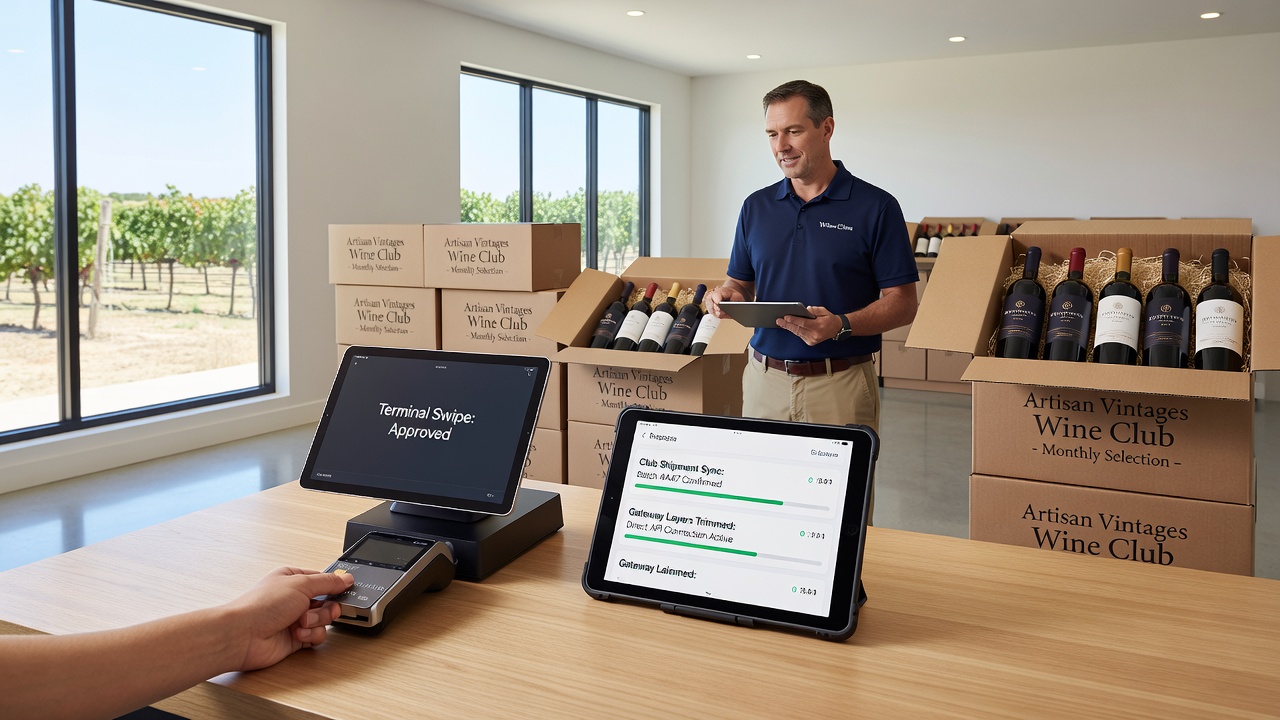
Payment timing plays a role because terminal swipes settle within one or two business days while recurring club charges often batch on the shipment release date, and aligned systems let wineries schedule both types of transactions to clear through the same gateway window. Figures from merchant service providers indicate that synchronized batching reduces the total number of settlement files submitted each month, which lowers administrative overhead and decreases the chance of mismatched reconciliation entries. Wineries in regions with seasonal harvest peaks, such as those preparing for August 2026 releases, have used this approach to manage higher transaction volumes without adding new gateway accounts.
Cost Structures and Volume Considerations
Interchange rates remain the largest component of total cost for both swipe and recurring card-not-present transactions, yet gateway fees and processor markups shrink when only one provider handles the entire flow. According to data compiled by North American retail payment groups, merchants processing under 500 transactions monthly see the clearest savings from layer reduction, while higher-volume operations benefit from negotiated blended rates applied across the unified stream. Wineries that maintain separate systems for each channel often absorb cumulative markups that reach 2.9 percent plus a flat fee per transaction, whereas consolidated routing keeps the markup closer to the base interchange plus a single gateway charge.
Those who have examined winery operations note that seasonal spikes during harvest and release periods create uneven transaction patterns, and syncing terminals with club shipments smooths the processing load by using the same infrastructure for both in-person and automated payments. This approach avoids the need for temporary additional gateways during peak months because the primary connection already accommodates the combined volume.
Examples from Operating Wineries
One California winery integrated its tasting room terminals with club software in early 2025 and recorded a 12 percent drop in monthly processing expenses within the first quarter after the change, primarily through elimination of a secondary recurring-payment gateway. Staff continued to process swipes normally while the system handled upcoming shipments without additional authorization steps. Another operator in Oregon linked terminal data to its club platform and observed that card verification performed during in-person visits reduced declines on later recurring charges, which previously required manual follow-up through a separate service.
Similar patterns appear in reports from smaller producers who sell both at the counter and through subscription clubs, where the single-gateway model supports compliance with payment card industry standards without duplicating security protocols across multiple vendors.
Conclusion
Boutique wineries continue to explore ways to connect terminal swipes with recurring club shipments through shared gateway infrastructure, and available data shows measurable reductions in layered fees when the two channels operate under one processing agreement. Integration requires initial setup time yet delivers ongoing alignment of authorization, settlement, and reporting functions. As volumes grow and release schedules intensify, particularly around periods such as August 2026, operators maintain focus on minimizing the number of payment processors involved while preserving reliable transaction flow for both in-person and automated club payments.