Inside the Calculations Merchants Use to Minimize Costs Across Gateways and Terminals for Recurring Services
Ines Krause · May 22, 2026
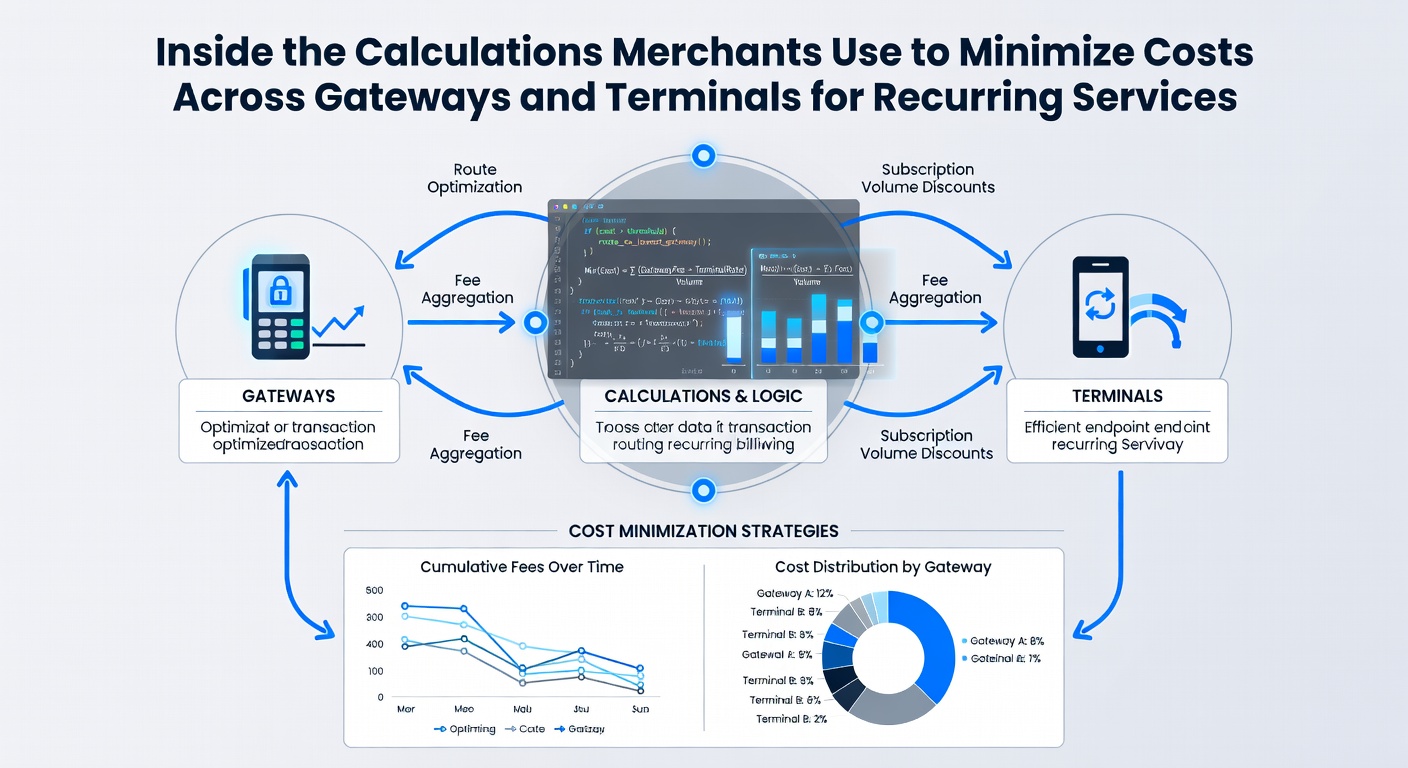
Inside the Calculations Merchants Use to Minimize Costs Across Gateways and Terminals for Recurring Services
Merchants handling recurring services face layered fee structures that combine gateway processing rates with terminal hardware expenses, adn the calculations they perform start with breaking down per-transaction costs into interchange components, network assessments, and processor markups. Data from payment networks shows these elements often account for 1.5 to 3.5 percent of transaction volume plus fixed fees ranging from 10 to 30 cents each, depending on card type and processing method.
Core Fee Components in Recurring Payment Flows
Those managing subscription models calculate total expense by separating card-based terminal transactions from digital gateway ACH transfers, since recurring billing frequently mixes both channels to accommodate customer preferences. Interchange fees for credit cards typically sit between 1.8 and 2.5 percent while debit card rates fall closer to 0.8 to 1.2 percent according to Visa and Mastercard schedules, yet merchants adjust these base rates against volume tiers that unlock lower percentages once monthly totals exceed set thresholds such as $50,000 or $100,000.
Gateway providers add their own layers including monthly platform fees between $10 and $50 plus per-transaction surcharges of 0.2 to 0.5 percent, while terminal leasing or ownership costs introduce separate monthly line items that range from $15 to $80 depending on whether devices support EMV chip, contactless, or integrated receipt printing. Observers note that companies running automated renewals often run spreadsheet models projecting twelve-month totals by multiplying average ticket size against expected transaction counts then layering fixed hardware and subscription charges.
Optimizing Across Blended Terminal and Gateway Channels
Merchants refine their approach by routing recurring card payments through gateways that offer tokenization at no extra per-token cost after initial setup, which reduces fraud-related declines that otherwise trigger retry fees of 25 to 50 cents each. Terminal operators meanwhile focus on batch settlement timing because same-day funding options carry higher discount rates of 0.1 to 0.3 percent compared with next-day or two-day options that lower those margins. Research from the Bank for International Settlements indicates that organizations blending both channels achieve measurable savings when they consolidate volume under single processors offering cross-channel pricing agreements.

Effective rate calculations become central once volume grows, and finance teams divide aggregate monthly fees by total processed revenue to derive a single percentage metric they track against industry benchmarks. European Central Bank reports from 2025 show average effective rates for recurring services hovering near 2.1 percent across mixed terminal and gateway setups, with lower figures appearing among high-volume merchants who negotiate custom pricing after demonstrating consistent processing above $200,000 monthly. Those calculations also incorporate failed payment recovery sequences, since retry logic across gateways can add 0.5 to 1.5 percent in cumulative costs if not capped through smart scheduling that limits attempts to three or four cycles.
Volume-Based Tier Modeling and Hardware Integration
Calculations grow more sophisticated when merchants project growth scenarios that shift them into new pricing tiers, and they model break-even points where the savings from reduced percentage rates offset any increase in monthly minimums or terminal upgrade expenses. Data released in May 2026 by payment industry analysts highlighted that merchants switching to unified platforms combining terminal and gateway reporting reduced reconciliation time by an average of 12 hours per month, translating into measurable labor cost reductions that factor into broader expense minimization frameworks. Hardware decisions enter the equation through total cost of ownership formulas that weigh upfront device prices against ongoing support contracts and software update fees, since terminals requiring proprietary integrations often carry higher long-term expenses than open-API alternatives.
Recurring service providers further refine their math by evaluating processor-specific rules around subscription billing descriptors and MID segmentation, because separate merchant accounts for recurring versus one-time transactions sometimes unlock lower reserve requirements that free up working capital otherwise held at 5 to 10 percent of volume. Those running multi-region operations compare cross-border gateway fees against domestic terminal rates, noting that international recurring transactions can add 1 to 2 percent in additional currency conversion and network fees unless routed through processors with localized acquiring partnerships.
Conclusion
Merchants arrive at optimized cost structures through iterative modeling that weighs every fee component against projected volumes and channel mixes, and the calculations they perform evolve alongside network rule changes and hardware advancements. Accurate tracking of effective rates, tier thresholds, and retry expenses allows recurring service businesses to maintain predictable margins while scaling operations across both physical terminals and digital gateways.