Settlement Timing Gaps in Digital Wallet and Bank Transfer Mixes for Event Ticketing Operators
Ines Krause · Jun 17, 2026
Settlement Timing Gaps in Digital Wallet and Bank Transfer Mixes for Event Ticketing Operators
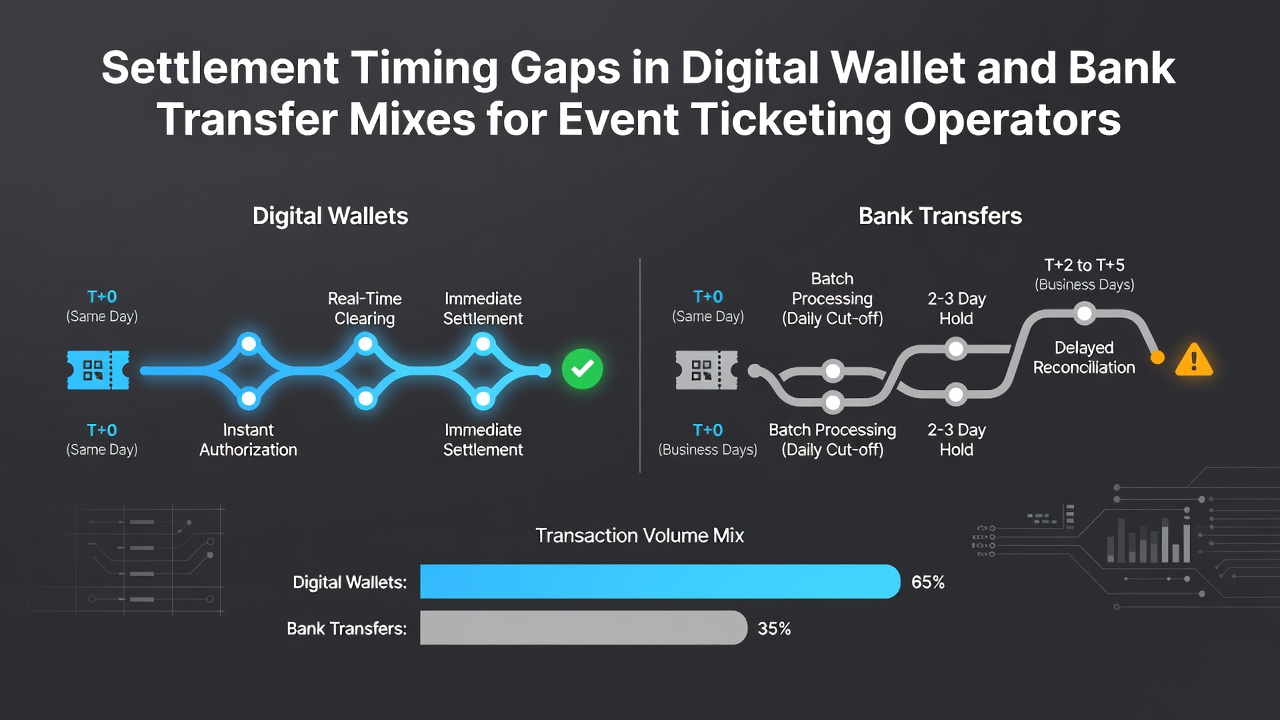
Event ticketing operators frequently combine digital wallets with bank transfers to accommodate diverse buyer preferences, yet these mixes introduce settlement timing gaps that affect cash availability and operational planning. Digital wallets such as those provided by major technology platforms often complete fund transfers within hours or a single business day, while bank transfers processed through automated clearing house networks typically require one to three business days for final settlement. Operators who blend these methods encounter periods where portions of revenue remain inaccessible even as events approach, creating mismatches between incoming funds and outgoing obligations like venue payments or artist advances.
How Payment Mixes Create Timing Discrepancies
Research from payment system analyses shows that digital wallet transactions settle faster because they rely on immediate authorization and batch processing within closed-loop networks, whereas bank transfers move through multiple intermediaries including originating and receiving depository institutions. When an operator accepts wallet payments for early ticket sales and bank transfers for larger group purchases, the wallet funds arrive first and can cover initial costs, but the delayed bank transfers leave gaps that require bridging through lines of credit or reserve accounts. Data from industry reports indicate these gaps widen during high-volume periods such as festival seasons when batch volumes strain processing queues.
Observers note that event ticketing platforms must reconcile transaction files from different processors daily, and discrepancies in settlement dates complicate ledger balancing. A single event might generate wallet settlements on Tuesday while corresponding bank transfers clear on Thursday, forcing finance teams to track separate reconciliation cycles rather than a unified inflow schedule. Figures from the Bank for International Settlements reveal that cross-border elements in some wallet services add further variability, especially when international buyers use wallet options tied to foreign bank accounts.
Impacts on Cash Flow for Ticketing Businesses
Operators managing recurring or multi-date ticket releases experience compounded effects when settlement gaps overlap with refund windows or chargeback periods. Those who have examined blended acceptance models find that delayed bank transfer funds reduce the working capital available for marketing campaigns or inventory procurement ahead of peak sales. In June 2026, updates to certain automated clearing house rules are scheduled to shorten some standard processing windows by half a day on average, which may narrow but not eliminate the timing differences between wallet and bank methods.
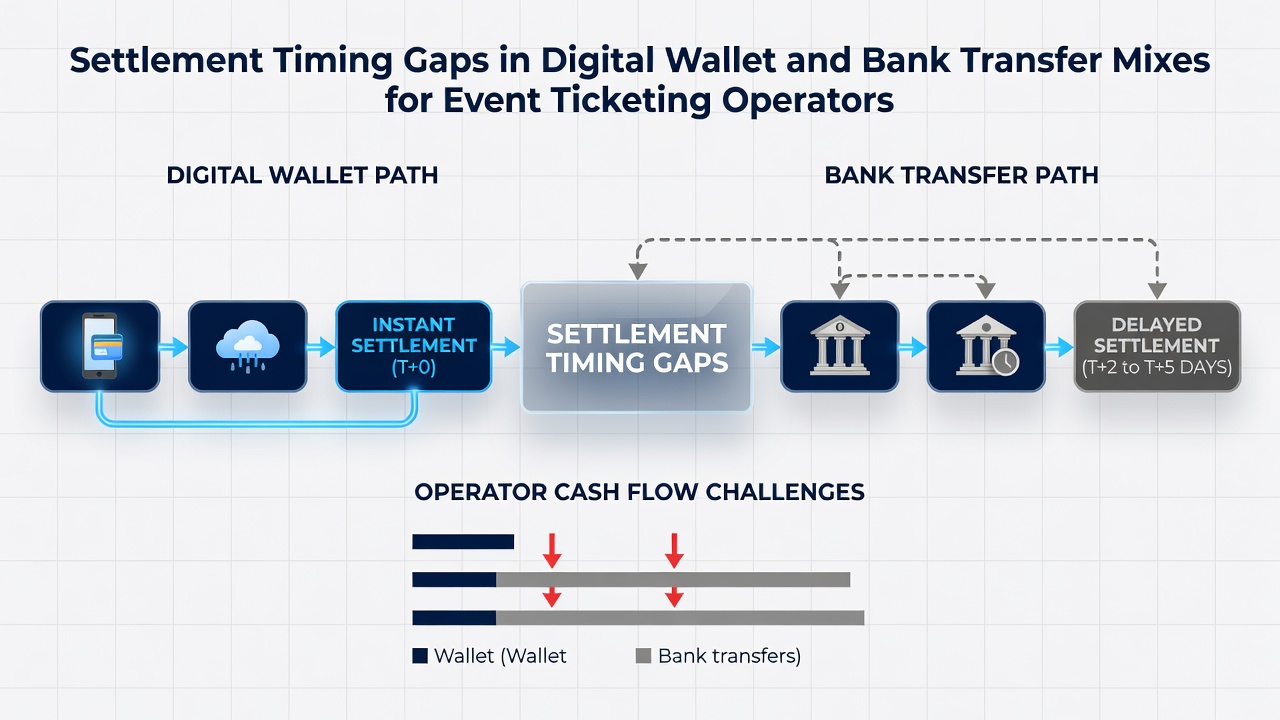
Take one regional ticketing provider that integrated wallet options alongside bank transfers for season passes; the company discovered that wallet settlements funded 60 percent of daily operations while bank transfers covered the remainder yet arrived after payroll cycles. This pattern required maintaining higher cash reserves to avoid shortfalls, increasing financing costs without changing overall transaction volumes. Studies from academic researchers at payment innovation centers confirm that such timing mismatches appear consistently across operators handling more than 10,000 transactions monthly.
Operational Adjustments and Reconciliation Practices
Ticketing operators address these gaps through segmented accounting ledgers that separate wallet and bank transfer inflows by expected settlement date. Software platforms used in the sector now include automated alerts that flag pending bank transfers against upcoming disbursement schedules, allowing teams to anticipate shortfalls rather than react after the fact. Evidence from merchant service analyses indicates that operators who align their refund policies with the slower settlement method experience fewer interruptions, because they hold back a portion of faster wallet receipts until all related bank transfers clear.
Regulatory guidance issued by the Federal Reserve highlights the importance of clear disclosure to buyers regarding settlement timelines when mixed payment options are presented at checkout. Compliance teams therefore review processor agreements to confirm that wallet and bank transfer reporting formats support unified cash forecasting models. Those who have reviewed transaction logs across multiple events observe that gaps average between 24 and 72 hours depending on the day of the week the transfer initiates, with weekend bank transfers extending the delay into the following week.
Conclusion
Settlement timing gaps arise directly from the distinct processing mechanics of digital wallets and bank transfers when operators combine them for event ticketing. Accurate forecasting, segmented reconciliation, and awareness of upcoming network rule changes help operators manage the resulting cash flow intervals without altering the payment choices offered to buyers. Continued monitoring of settlement data supports more precise alignment between revenue inflows and operational outflows.