Timing ripples from blended ACH and card authorizations in mobile service subscription networks
Sam Friedrich · Jul 8, 2026
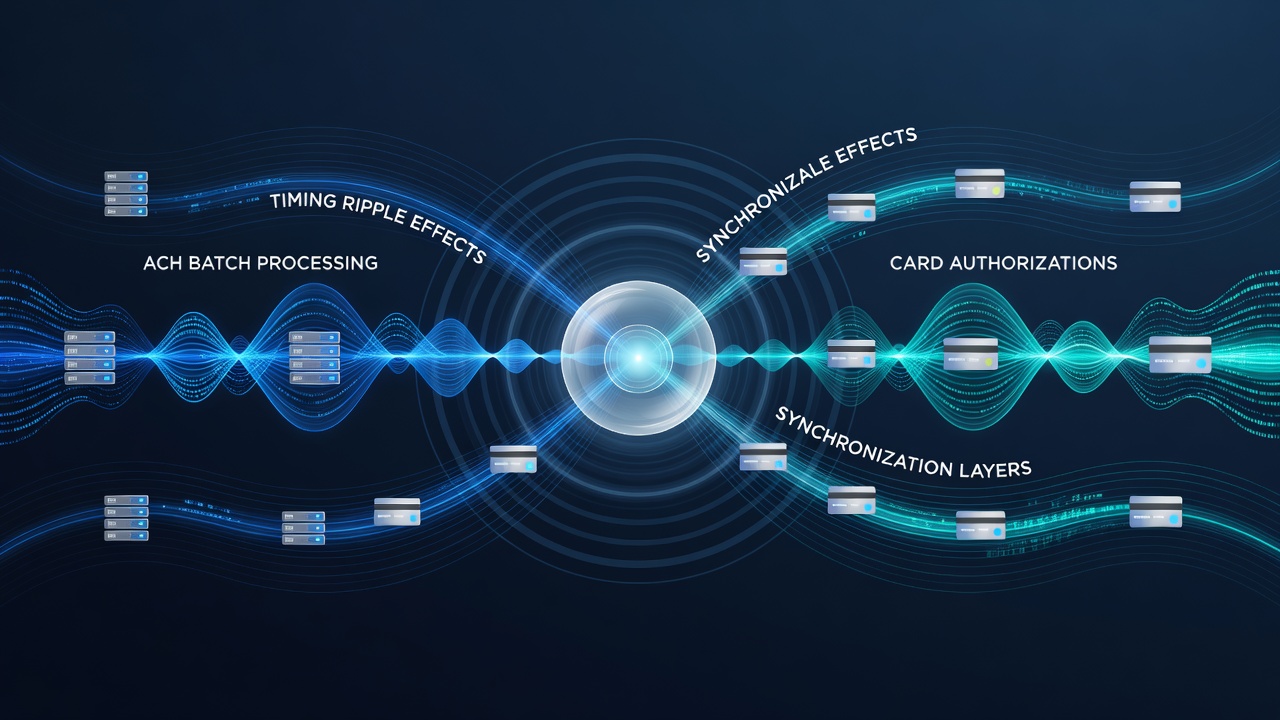
Timing ripples from blended ACH and card authorizations in mobile service subscription networks
Mobile service subscription networks rely on blended payment methods where ACH bank transfers and card authorizations operate side by side, and the timing differences between these systems create measurable effects on fund availability and renewal cycles. ACH transactions typically clear within one to three business days while card authorizations receive approval in seconds yet settle over one to two days, and operators must coordinate both to maintain consistent subscriber access across platforms.
Core Differences in Processing Sequences
Card authorizations trigger immediate holds on available credit or debit balances, and these holds release once settlement completes, whereas ACH entries move through batch processing that follows specific daily cutoffs set by originating banks. Data from the Federal Reserve shows that same-day ACH volumes reached record levels by early 2026, yet standard ACH entries still follow next-day or two-day timelines in many mobile billing setups. Operators blend these methods when subscribers select preferred funding sources at signup, and the resulting sequence means card-based renewals often post before ACH transfers finalize.
Timing ripples appear when a subscriber switches from card to ACH mid-cycle or when a card declines and the system falls back to bank transfer. In such cases the authorization window stretches because the ACH batch must wait for teh next clearing window, and service providers report extended holds that affect account status indicators visible to end users.
Effects on Mobile Network Renewal Flows
Subscription platforms that accept both payment types must align authorization windows with recurring billing dates, and misalignment produces gaps where services risk temporary suspension. Research indicates that networks handling high volumes of mobile subscriptions experience the widest timing variances during month-end renewal peaks, when ACH batches compete with card settlement queues for processing priority. July 2026 brought new API standards from several mobile carriers that required real-time status updates between gateways and billing engines, tightening the coordination required for blended authorizations.
Settlement Schedule Variations
Card networks post settled funds to merchant accounts on a T+1 or T+2 basis depending on the acquiring bank, while ACH credits arrive according to the receiving bank's schedule and can extend to T+3 when weekends or holidays intervene. Those managing mobile service subscriptions track these differences through reconciliation reports that flag pending ACH entries against completed card transactions. The resulting cash-flow pattern shows card revenue recognized earlier in the cycle, which influences how operators allocate reserves for chargeback handling and failed ACH returns.
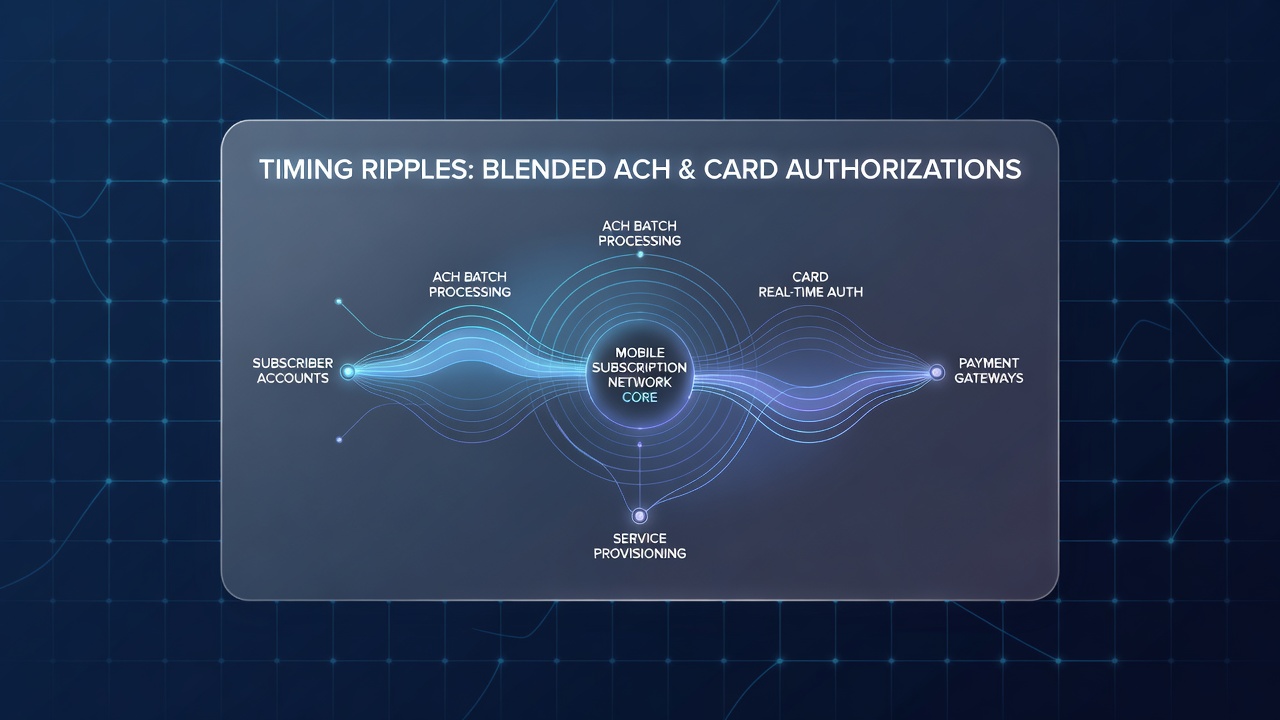
Observers note that blended environments require precise timestamp matching between authorization messages and settlement files, and mismatches trigger automated retries that consume additional processing cycles. One study of subscription platforms found that ACH return rates averaged 1.2 percent in 2025, with timing mismatches contributing to roughly one-third of those returns when card fallback logic activated too late in the renewal window.
Coordination Challenges Across Gateways
Gateway providers supply separate endpoints for card and ACH traffic, and subscription networks integrate both into unified billing logic that evaluates funding source priority on each renewal attempt. When an ACH authorization initiates after a card decline, the system must pause service provisioning until the bank transfer clears or another payment method succeeds. Reports from the Reserve Bank of Australia highlight similar coordination patterns in digital subscription markets, where blended authorization timing directly correlates with subscriber retention metrics during the first three renewal cycles.
Operators address these challenges by configuring fallback hierarchies that prioritize faster card authorizations for immediate access restoration while ACH entries run in parallel for longer-term funding. This dual-track approach reduces visible service interruptions yet increases reconciliation workload because each payment type generates distinct status codes and reversal rules.
Conclusion
Blended ACH and card authorizations in mobile service subscription networks produce timing ripples that affect settlement speed, renewal reliability, and operational reporting requirements. Data shows these effects intensify during high-volume periods and regulatory shifts such as the July 2026 API updates, and platforms continue to refine sequencing rules to align both payment rails with subscriber expectations for uninterrupted service.